On this page
If you’re hitting the road in Queensland - remember, it’s the most disaster-prone state in Australia, and conditions can change fast.
Before setting up camp, ask local people for important information. You can speak with service station staff when you stop for fuel or check in with the campground operator. Find out about natural hazards in the area, such as bushfires, floods, or severe weather. Ask what you should do if there is a warning or emergency.
A little local knowledge can make your trip safer and less stressful.
Heading off soon? Check out our Visitor Safety Tips before you go.
What to do if a severe weather warning has been issued:
If there is a bushfire or severe weather warning while you are camping or driving, follow these steps to protect your caravan and reduce damage.
Hover over the interactive dots below or expand the checklist to find out how.
Alternatively, the following checklist is also available in the Get Ready Queensland Protection while you are out and about booklet (PDF, 1.21MB) which is available to download.
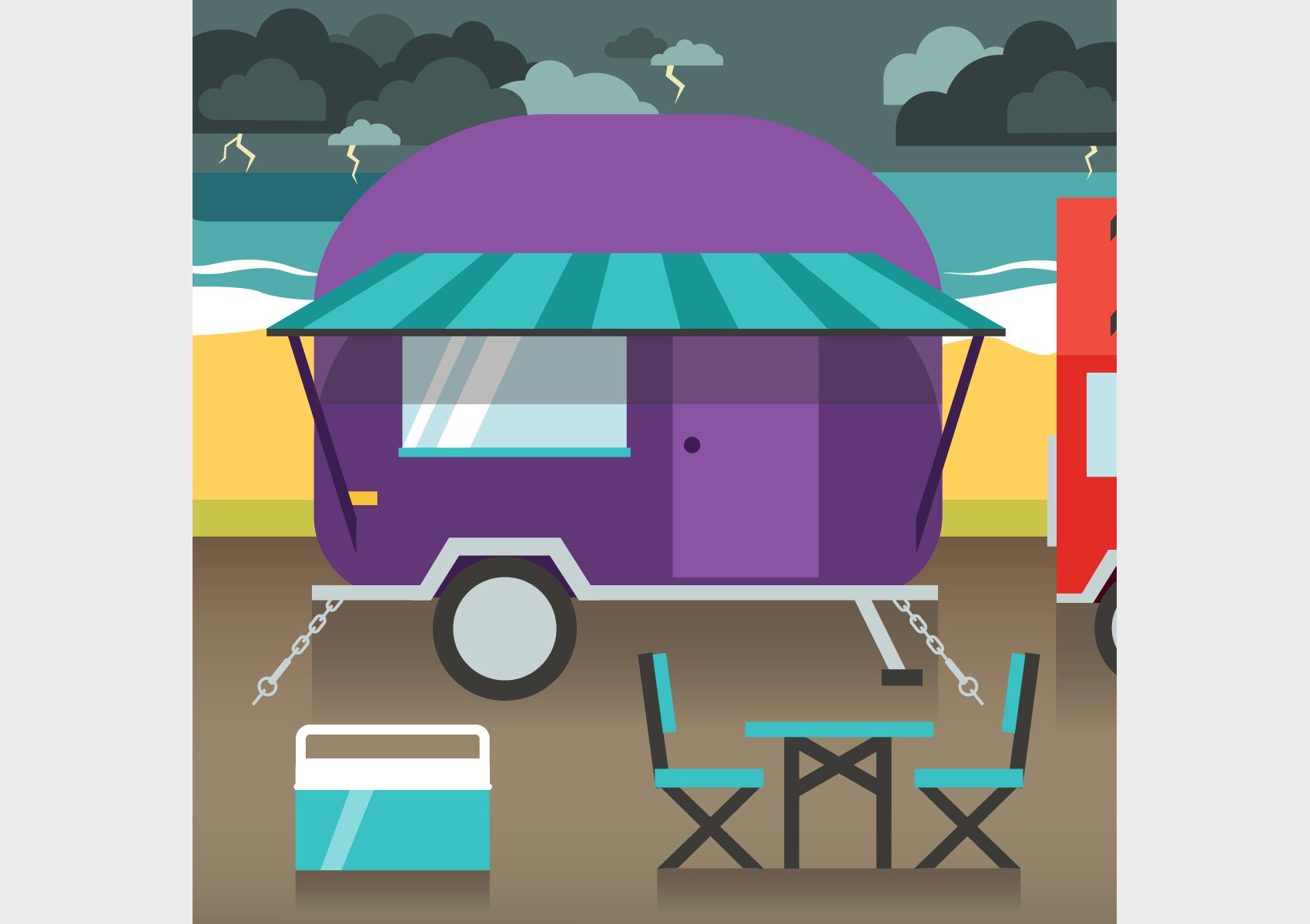
When parking or relocating your caravan during a severe weather warning, position it with the narrow end facing the wind. Avoid parking under trees that could fall, and stay clear of areas prone to flooding.

Apply the brakes and place wheel chocks to keep your caravan from moving.

Take your awning down as soon as possible.

If there are no anchor points, dig holes under your caravan wheel to increase wind resistance, sink posts of angle iron at the tyre corners. Caravan parks in high-wind areas usually provide ground anchor points. If there is an anchor point, you should tie down your chassis with either short lengths of strong chain and turnbuckles or sound rope of at least 9.5mm diameter. If there are no anchor points, you should use nylon rope or steel cable anchored at ground level and attached to the caravan chassis.

Tie down your roof - the most effective roof tie-down is a strong net firmly fixed at ground level and passing over the full length of the caravan.

Put all your equipment inside the caravan, including your annex, bikes, chairs, household items.

If a storm surge or flood warning is issued, unplug all electrical devices and move them to a higher level to keep them dry. Turn off all gas supplies to reduce the risk of fire or leaks.

Even if your caravan is firmly secured, it is safest to find alternative shelter when there is a warning of strong or approaching high winds.

When exploring the wilderness, be prepared for bushfires and wildfires. To protect your caravan from fire, install a smoke and carbon monoxide detector in your rig for an added safety measure and keep a fire extinguisher near the door inside the caravan.

When parking or relocating your caravan during a severe weather warning, position it with the narrow end facing the wind. Avoid parking under trees that could fall, and stay clear of areas prone to flooding.
Apply the brakes and place wheel chocks to keep your caravan from moving.
Take your awning down as soon as possible.
If there are no anchor points, dig holes under your caravan wheel to increase wind resistance, sink posts of angle iron at the tyre corners. Caravan parks in high-wind areas usually provide ground anchor points. If there is an anchor point, you should tie down your chassis with either short lengths of strong chain and turnbuckles or sound rope of at least 9.5mm diameter. If there are no anchor points, you should use nylon rope or steel cable anchored at ground level and attached to the caravan chassis.
Tie down your roof - the most effective roof tie-down is a strong net firmly fixed at ground level and passing over the full length of the caravan.
Put all your equipment inside the caravan, including your annex, bikes, chairs, household items.
If a storm surge or flood warning is issued, unplug all electrical devices and move them to a higher level to keep them dry. Turn off all gas supplies to reduce the risk of fire or leaks.
Even if your caravan is firmly secured, it is safest to find alternative shelter when there is a warning of strong or approaching high winds.
When exploring the wilderness, be prepared for bushfires and wildfires. To protect your caravan from fire, install a smoke and carbon monoxide detector in your rig for an added safety measure and keep a fire extinguisher near the door inside the caravan.
When parking or relocating your caravan during a severe weather warning, position it with the narrow end facing the wind. Avoid parking under trees that could fall, and stay clear of areas prone to flooding.
Apply the brakes and place wheel chocks to keep your caravan from moving.
Take your awning down as soon as possible.
If there are no anchor points, dig holes under your caravan wheel to increase wind resistance, sink posts of angle iron at the tyre corners. Caravan parks in high-wind areas usually provide ground anchor points. If there is an anchor point, you should tie down your chassis with either short lengths of strong chain and turnbuckles or sound rope of at least 9.5mm diameter. If there are no anchor points, you should use nylon rope or steel cable anchored at ground level and attached to the caravan chassis.
Tie down your roof - the most effective roof tie-down is a strong net firmly fixed at ground level and passing over the full length of the caravan.
Put all your equipment inside the caravan, including your annex, bikes, chairs, household items.
If a storm surge or flood warning is issued, unplug all electrical devices and move them to a higher level to keep them dry. Turn off all gas supplies to reduce the risk of fire or leaks.
Even if your caravan is firmly secured, it is safest to find alternative shelter when there is a warning of strong or approaching high winds.
When exploring the wilderness, be prepared for bushfires and wildfires. To protect your caravan from fire, install a smoke and carbon monoxide detector in your rig for an added safety measure and keep a fire extinguisher near the door inside the caravan.
Protecting your family and travelling companions
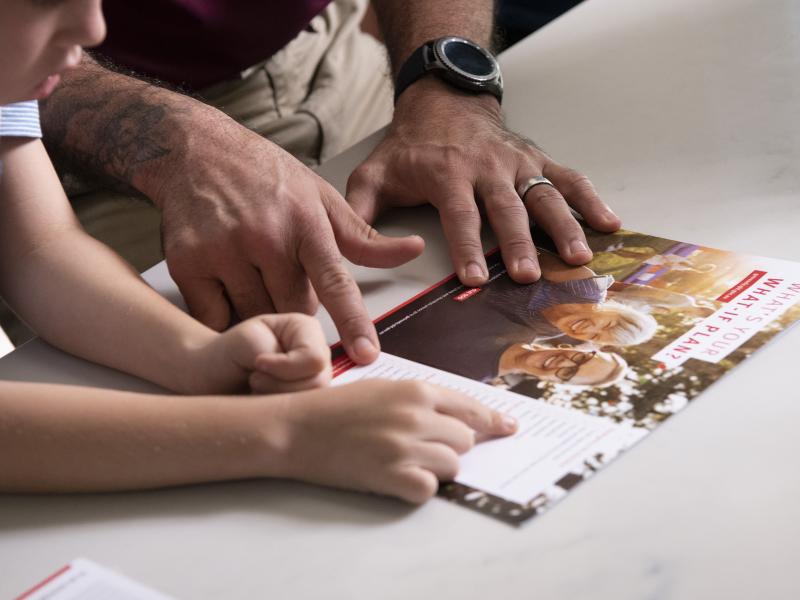
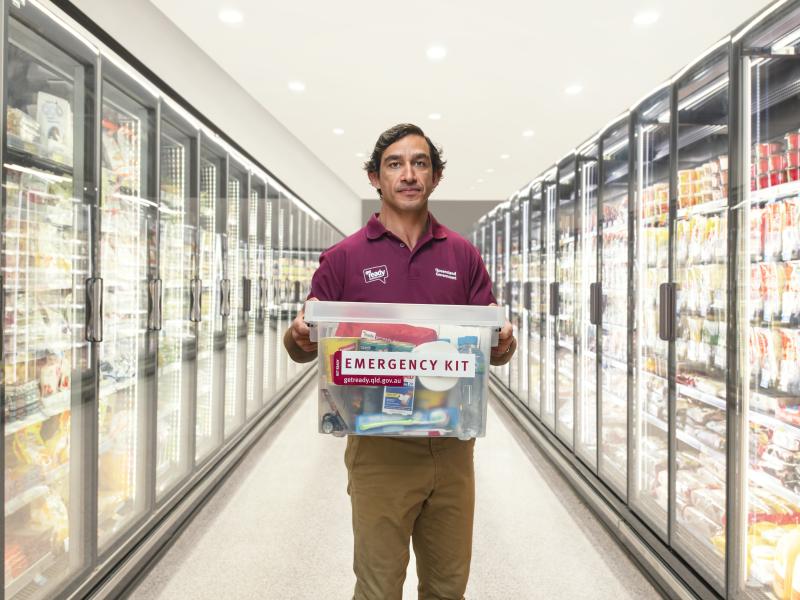
In addition to protecting your caravan, you also need to complete three steps before you leave home to protect your family and other travelling companions should you encounter a natural disaster on your holiday.
Get Ready in 3 steps:

Find out more and Get Ready
Check out these other pages and resources to help you Get Ready.