On this page
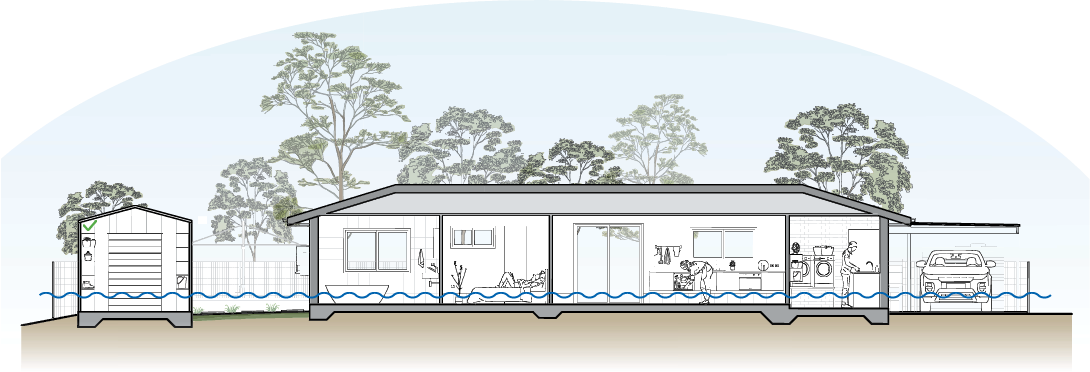
Raise storage shelves so that belongings avoid damage from flooding.

Use flood-resilient grout on tiles such as epoxy.

Use rigid cell insulation in cavity walls to minimise risk of mould.

Raise services like air conditioner units and switchboards.

Install freestanding bathtub to minimise gaps where water can be trapped. It also makes clean-up easier.

Raise powerpoints above the flood level to avoid damage.

Replace cavity walls with non-cavity walls to minimise the chance of mould and make it easier to clean.

Install door sills that are flush to the floor to make it easier to sweep out flood water and debris.

Use flood-resilient wall linings to minimise water damage.
Replace non-resilient flooring and skirting with materials that are flood-resilient.
Raise electrical appliances like dishwashers, dryers and washing machines above the flood line.

Replace non-water-resistant cabinetry with a flood-resilient material and install removable kickboards to make cleaning easier.
Replace hollow core doors with solid core doors that are painted on all sides (including the bottom of the door).

Install a permeable garage door to allow water to flow through and minimise damage to the door itself.

Raise storage shelves so that belongings avoid damage from flooding.
Use flood-resilient grout on tiles such as epoxy.
Use rigid cell insulation in cavity walls to minimise risk of mould.
Raise services like air conditioner units and switchboards.
Install freestanding bathtub to minimise gaps where water can be trapped. It also makes clean-up easier.
Raise powerpoints above the flood level to avoid damage.
Replace cavity walls with non-cavity walls to minimise the chance of mould and make it easier to clean.
Install door sills that are flush to the floor to make it easier to sweep out flood water and debris.
Use flood-resilient wall linings to minimise water damage.
Replace non-resilient flooring and skirting with materials that are flood-resilient.
Raise electrical appliances like dishwashers, dryers and washing machines above the flood line.
Replace non-water-resistant cabinetry with a flood-resilient material and install removable kickboards to make cleaning easier.
Replace hollow core doors with solid core doors that are painted on all sides (including the bottom of the door).
Install a permeable garage door to allow water to flow through and minimise damage to the door itself.
Raise storage shelves so that belongings avoid damage from flooding.
Use flood-resilient grout on tiles such as epoxy.
Use rigid cell insulation in cavity walls to minimise risk of mould.
Raise services like air conditioner units and switchboards.
Install freestanding bathtub to minimise gaps where water can be trapped. It also makes clean-up easier.
Raise powerpoints above the flood level to avoid damage.
Replace cavity walls with non-cavity walls to minimise the chance of mould and make it easier to clean.
Install door sills that are flush to the floor to make it easier to sweep out flood water and debris.
Use flood-resilient wall linings to minimise water damage.
Replace non-resilient flooring and skirting with materials that are flood-resilient.
Raise electrical appliances like dishwashers, dryers and washing machines above the flood line.
Replace non-water-resistant cabinetry with a flood-resilient material and install removable kickboards to make cleaning easier.
Replace hollow core doors with solid core doors that are painted on all sides (including the bottom of the door).
Install a permeable garage door to allow water to flow through and minimise damage to the door itself.
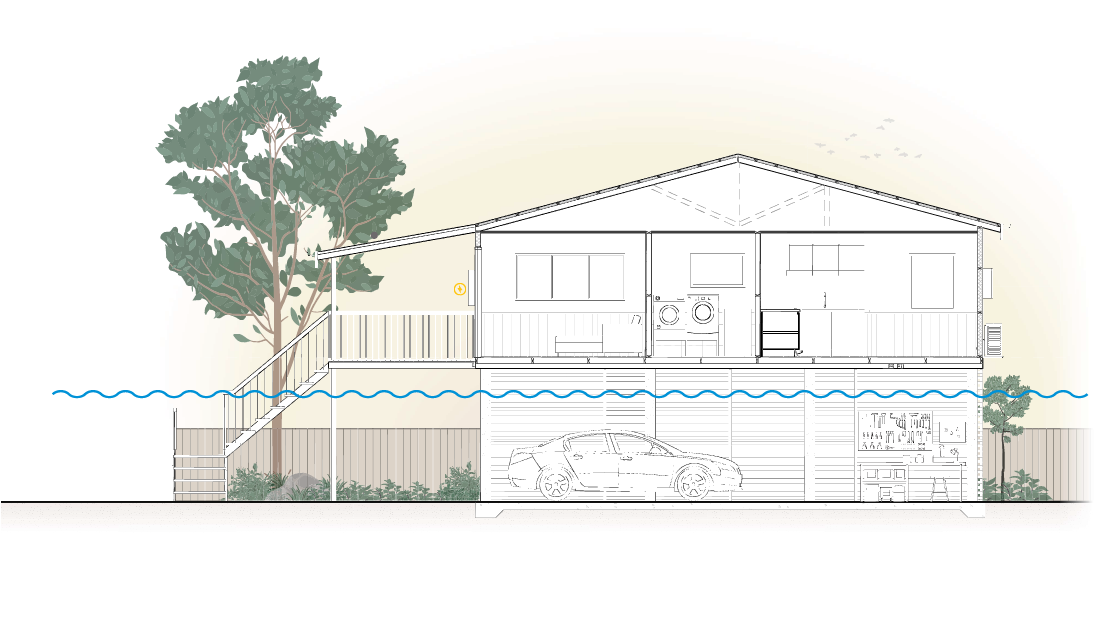
Remove roof sheeting before raising to avoid extra scaffolding costs.

Raise switchboards above the flood level to avoid water inundation.
Separate circuits between upstairs and downstairs.

Carry out maintenance works before you raise to avoid extra costs.
Consider painting the underside of your house for easy cleaning and to minimise mould.
Raise appliances like your washing machine and dryer above the flood level.
Remove and replace non-water-resistant substrates to minimise warping, rot and damage.
Attach utilities to house before raising to avoid extra costs.
Raise your home above the projected flood level. Flood levels vary by suburb. You can check your projected flood level with your local council.

Remove roof sheeting before raising to avoid extra scaffolding costs.
Raise switchboards above the flood level to avoid water inundation.
Separate circuits between upstairs and downstairs.
Carry out maintenance works before you raise to avoid extra costs.
Consider painting the underside of your house for easy cleaning and to minimise mould.
Raise appliances like your washing machine and dryer above the flood level.
Remove and replace non-water-resistant substrates to minimise warping, rot and damage.
Attach utilities to house before raising to avoid extra costs.
Raise your home above the projected flood level. Flood levels vary by suburb. You can check your projected flood level with your local council.
Remove roof sheeting before raising to avoid extra scaffolding costs.
Raise switchboards above the flood level to avoid water inundation.
Separate circuits between upstairs and downstairs.
Carry out maintenance works before you raise to avoid extra costs.
Consider painting the underside of your house for easy cleaning and to minimise mould.
Raise appliances like your washing machine and dryer above the flood level.
Remove and replace non-water-resistant substrates to minimise warping, rot and damage.
Attach utilities to house before raising to avoid extra costs.
Raise your home above the projected flood level. Flood levels vary by suburb. You can check your projected flood level with your local council.