Stronger together for Queensland communities
Queensland's disasters are getting more frequent and more severe, and that's putting more pressure on our emergency services and volunteers than ever before. Across the state, we need every bit of extra capacity we can find, and one partner is stepping up in a way you might not expect: Queensland Corrective Services (QCS).
Through work camps and community service programs, low-security prisoners and offenders are lending a hand, from sandbagging ahead of a flood to clearing debris after a cyclone. It's a partnership with a long history in Queensland, and it's proving to be one of the most practical ways we're building disaster resilience together.
Where it all began
QCS's involvement in disaster response goes back to the 1990 Charleville floods, when the first work camps were set up. Since then, they've become one of the most successful prisoner rehabilitation programs in the country, and disaster recovery has been part of that story from day one.
Low-security prisoners and community service offenders still turn out after floods, storms and other disasters, but their contribution doesn't stop there. Year-round, they're maintaining parks, showgrounds and cemeteries, and helping restore landmarks and buildings that matter to their communities.

A skilled, ready workforce
It's easy to overlook this group as a resource, but many prisoners and offenders bring genuine, useful skills to the table: manual labour, construction, teamwork. During disaster operations, that's exactly what's needed.
Community service gives prisoners and offenders a way to give back to the community while building life and job-ready skills, growing their networks, and in some cases, securing work once their sentence or order is complete.
Tasks like stockpiling sandbags, reducing bushfire risk, restoring riverbanks and maintaining infrastructure all help build the kind of capacity Queensland communities need to prepare for, respond to and recover from disasters.
These tasks use skills such as sandbagging, operating machinery, ground maintenance and gardening and emergency response support. They give people practical training and real industry exposure, alongside a genuine sense of purpose.
Correctional centres are backing these initiatives, and Community Corrections is actively looking for more disaster-focused community service projects. When QCS partners with disaster and emergency management agencies, local governments and community organisations, everyone benefits, including our emergency staff and volunteers, who get some relief from fatigue.
Communities helped so far
Innisfail
Innisfail Work Camp, aligned with Lotus Glen Correctional Centre, was established to help clean up after Cyclone Larry in 2006. Since then, the crew has turned out time and time again: after Cyclone Yasi in 2011, helping rebuild Cooktown following Cyclone Ida in 2014, and supporting communities through the floods from Cyclone Oma in 2019 and the impact of Cyclone Jasper in 2023.
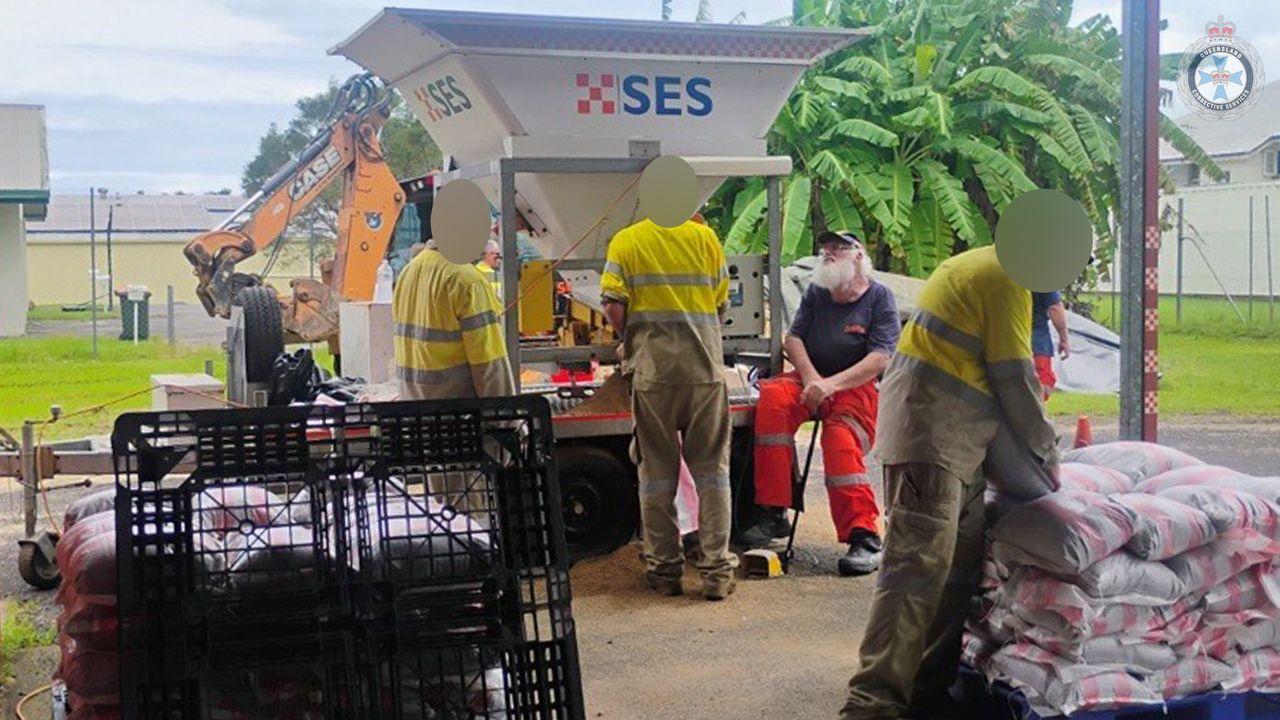
As part of their regular community service, the Innisfail crew has also helped the local State Emergency Service (SES) install a sandbagging hopper, cleared drains and gutters, and cut back trees to prevent storm damage.
Townsville
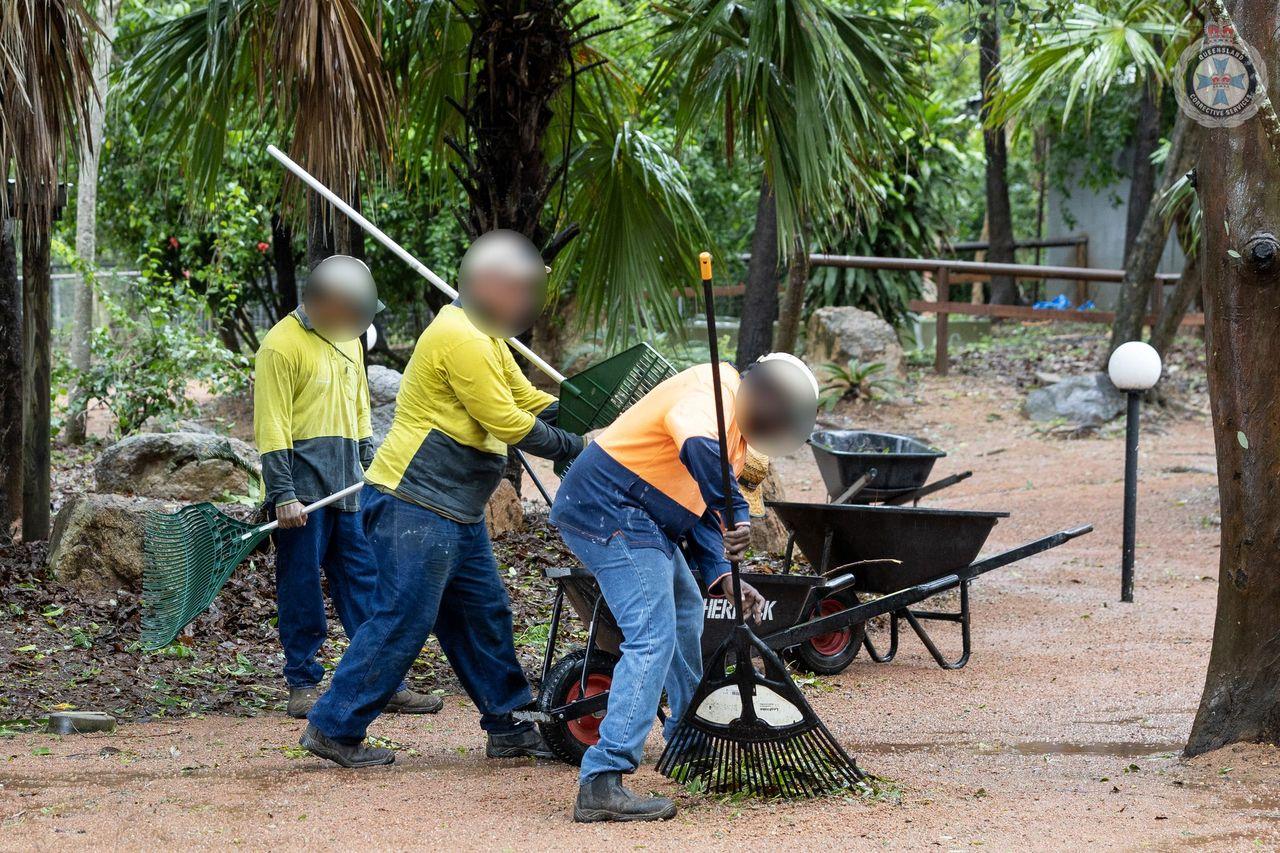
During Cyclone Kirrily in January 2024 and Cyclone Alfred in March 2025, Townsville Men's Low Custody Centre, along with the Winton, Boulia and Julia Creek work camps, teamed up with local stakeholders on sandbagging and clean-up efforts, including support for local animal sanctuaries. Low-risk prisoners cleared debris, raked paths and cleared fallen branches to help get Townsville's much-loved Billabong Sanctuary back on its feet.
Julia Creek
When flooding hit the Kynuna township during Cyclone Kirrily, the Julia Creek Work Camp stepped in. Under officer supervision, prisoners helped clean up the community, removing mud, hosing down buildings, cleaning furniture and clearing rubbish. Following Northwest Queensland's devastating floods in early 2026, the crew was back again, taking on the difficult job of helping remove dead cattle.
Charleville
During the catastrophic flooding across Central and Southwest Queensland in early 2025, the Charleville Work Camp where there to help throughout the community. Officers supervised prisoners at Charleville airport, helping load and unload food supplies bound for Quilpie and surrounding areas, and the crew filled more than 1,000 sandbags for community use.
These efforts do more than help communities recover. They give prisoners a genuine chance to make reparation as part of their rehabilitation, which supports lower reoffending and fewer future victims of crime.
Clermont
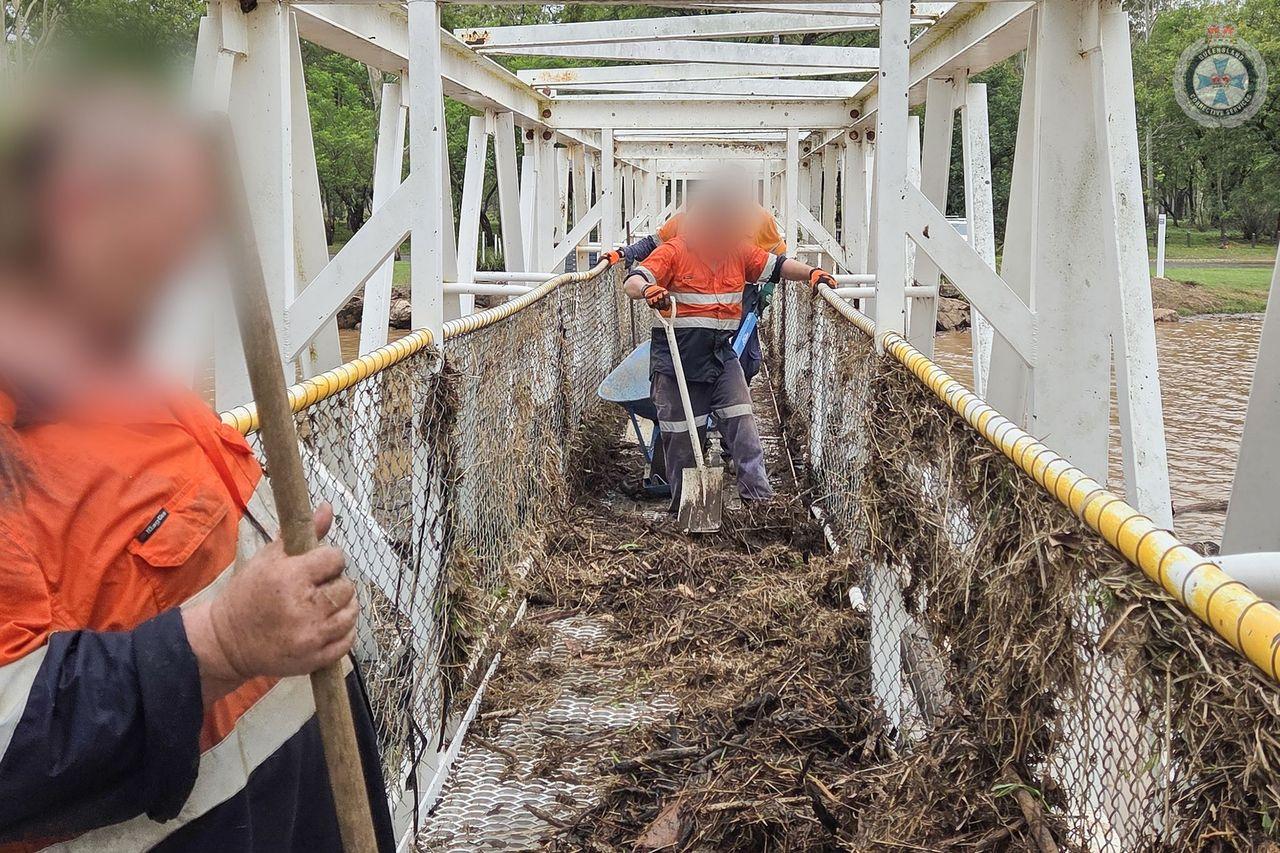
In January 2026, Clermont copped its wettest day in 110 years thanks to ex-Tropical Cyclone Koji, and the town was inundated. Once the floodwaters receded, the Clermont Work Camp got to work cleaning up around Hoods Lagoon Bridge and Century Park, public spaces that hold real meaning for the community as memorials to the devastating 1916 floods. The crew returned the next day to keep going across the rest of the lagoon and parkland areas.
Want to get involved?
If you're part of a Queensland local government and interested in supporting future disaster management initiatives with QCS, reach out to the Organisational Resilience Group at DisasterManagement@corrections.qld.gov.au to find out more.